
The difference between active and passive website traffic and why it matters.

Social media creates demand. Search captures it.
One of the primary goals of digital marketing is simple: get people to your website.
But here’s the part many businesses overlook:
Not all traffic is equal.
Website visitors generally fall into two categories, active and passive. Understanding the difference can change how you allocate your marketing time and budget.
This post is based on a video where we explain the difference between active and passive traffic. If you prefer to watch instead of read, you can view it on YouTube.
Passive Traffic: You Show Up in Their World
Passive traffic happens when people are going about their day and your brand appears in front of them.
Examples include:
Social media posts
Paid social ads
Email marketing
They weren’t searching for you. They weren’t actively looking for your product or service. You showed up in their feed or inbox.
Intent is low.
That doesn’t make passive traffic bad. It just means you’re trying to generate interest in the moment instead of capturing existing demand.
That usually takes more effort and more budget.
Active Traffic: They’re Looking for a Solution
Active traffic is different. This is when someone goes to Google and searches for exactly what they need.
Examples include:
Google Ads sponsored search results
SEO organic rankings
Google Business Profile local search
These people already want something. They’re searching for it. They’re comparing options.
Intent is high.
And high intent typically converts better.
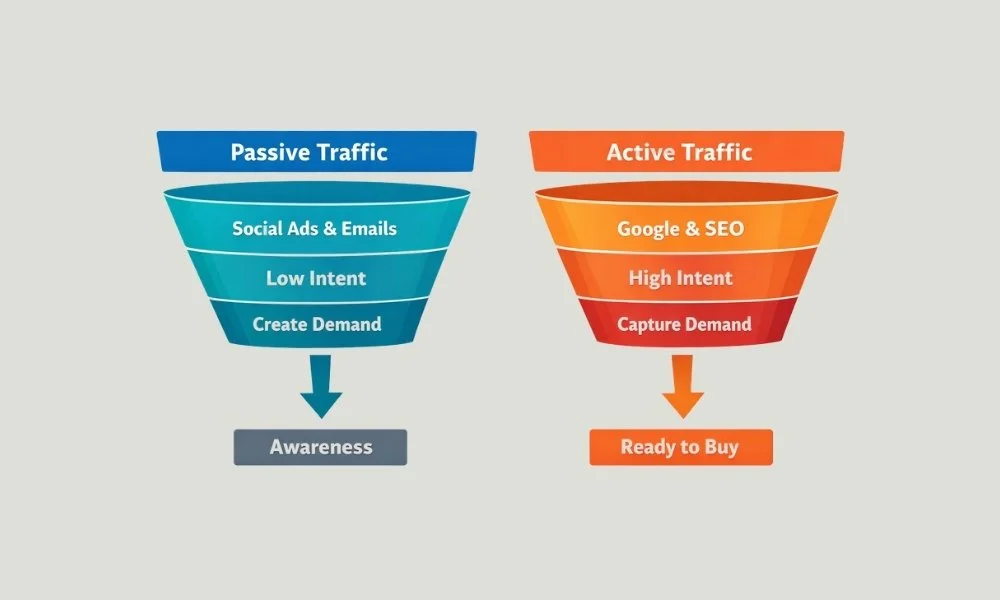
Passive traffic creates awareness. Active traffic captures buying intent.
Active vs. Passive Traffic: The Pizza Example
Imagine you own a pizza shop.
Option 1: Someone searches “pizza near me,” finds your listing, checks your hours, and places an order.
Option 2: You go door to door asking people if they’d like to buy a pizza.
You might make a sale either way.
But one is far more efficient.
That’s the difference between active and passive traffic.

Searching for pizza captures demand. Knocking on doors tries to create it.
Where Should You Focus?
The honest answer is that it depends. Some businesses do well with social media content and paid ads. But content creation costs money. Social management costs money. Paid distribution costs money.
If you have limited resources, time, money, or expertise, focus on active traffic first.
Make sure:
You show up in local search
Your SEO foundation is solid
You are visible in paid search where it makes financial sense
For many small businesses, search driven traffic brings in more qualified prospects and produces stronger ROI.
“Capture existing demand before trying to create new demand.”
Measure What Actually Matters
Whether you invest in active or passive channels, the real question isn’t:
How many clicks did we get?
How many impressions?
How many followers?
The question is:
Did it produce profitable sales?
Use your analytics. Track conversions. Measure return on investment. Double down on what works. Cut what does not. Traffic volume is easy to chase. Buyer intent is what drives revenue.
You can also watch our video Active vs Passive Website Traffic on YouTube.